Loading…
The Complete Guide to Planning a Corporate Event in Dubai
Plan a corporate event in Dubai around a business objective, then align venue, budget, agenda, production and measurement to that single goal.
Back to blog
Vulture Events Team13 min readEvent Planning
Most corporate events that disappoint were not badly produced; they were badly defined. The lighting worked, the catering arrived, the speakers turned up — and yet nobody could say what the event was supposed to change. A strong corporate event in Dubai starts with a business decision and works backwards, connecting every choice of venue, agenda and production to a measurable outcome.
Dubai rewards ambition and punishes vagueness. The city offers world-class venues, crews and suppliers, which means production quality is rarely the differentiator. Clarity is. The organisations that get the best return treat the event as a business tool with a live dimension, not as a hospitality expense that somehow creates goodwill on its own.
Define the one thing this event must achieve
Begin by naming the single most important result: closing a sales quarter, launching a strategy internally, thanking a channel network, or positioning leadership in front of the regional press. Everything else is secondary. When you can state the objective in one sentence, you have a reference point for every trade-off that follows, from guest list to run of show.
Write down how you will know it worked, too. Pipeline generated, attendance from a target account list, internal survey scores, media pickups — a defined metric keeps the event honest and gives you something concrete to report afterwards.
If leadership cannot agree on the primary objective, stop and resolve that before you book a ballroom. Competing objectives produce bloated agendas and diluted messaging. A secondary goal can exist, but it should not fight the primary one for stage time or budget.
Set a budget that reflects priorities
A Dubai corporate budget spans venue, food and beverage, production, staffing, content, and a contingency you should never skip. Rather than spreading money evenly, invest where the objective demands it. A leadership announcement lives or dies on stage, sound and screens; a relationship-building dinner rewards spend on venue, food and hospitality instead.
Keep a contingency of around ten to fifteen percent. In a city where venues, permits and last-minute changes can move quickly, that buffer is the difference between calm problem-solving and a scramble.
Ask suppliers for itemised proposals so you can compare like with like. A low headline price that excludes power, overtime, content operators or VIP transport is not cheaper — it is incomplete. Vulture Events’s corporate events service typically structures budgets around the outcome first, then allocates production and hospitality in proportion to that outcome rather than by habit.
Choose the right venue for the format
Dubai offers everything from ballrooms along Sheikh Zayed Road to convention halls at the Dubai World Trade Centre, rooftops, beach clubs, desert camps and yachts. The right choice depends on your format and audience:
- Conferences and AGMs: convention centres and hotel ballrooms with strong AV infrastructure
- Board-level dinners: intimate private dining with discretion and service quality
- Launches and press events: distinctive spaces that photograph well and reinforce the message
- Incentives and celebrations: experiential venues such as desert camps, yachts or beach clubs
Visit shortlisted venues in person, and check the unglamorous details early: load-in access, power supply, ceiling height, rigging points and internet capacity. These determine what is actually possible on the day.
Also ask about concurrent events. A hotel hosting three galas on the same night may share lifts, parking and kitchen capacity in ways that affect your guest experience. Peak season — roughly October through April, plus key trade-show weeks — books early for the best rooms and dates.
Build an agenda around attention, not slots
The most common agenda mistake is filling time rather than managing energy. Front-load the content that matters, keep sessions shorter than you think necessary, and protect the breaks — networking and conversation are often where the real value happens. Alternate formats so the day has rhythm: a keynote, then a panel, then something interactive rather than three lectures in a row.
For any session with a speaker, agree the exact brief, length and key message in advance, and rehearse the transitions between segments. Handovers are where live events feel amateurish or polished.
In Dubai, many corporate audiences are time-poor and multilingual. Simultaneous interpretation, clear slides and disciplined timing are not luxuries; they are how you keep people in the room mentally as well as physically. If you must cover dense material, put the detail in a leave-behind and keep the live session focused on decisions and discussion.
Communicate clearly with guests
Registration and communication shape the experience before anyone arrives. Make the invitation clear about date, venue, dress code, parking and what to expect. Use a clean registration process, send reminders, and provide practical joining details — in Dubai, that includes clear directions, valet or parking guidance, and any ID requirements for restricted venues.
On the day, on-site registration should be fast and well-staffed. A long queue at the door is the first thing guests remember and the easiest to avoid.
Segment your messaging. VIPs, speakers, general delegates and media need different information at different times. A single mass email rarely serves all of them well. Confirm dietary needs and accessibility requirements early enough for catering and seating plans to absorb them without drama.
Plan production as a single system
Staging, lighting, sound, screens, content and show-calling are not separate purchases; they are one system that has to work together. This is where a single accountable production partner pays for itself. One team can align the technical design with the agenda, run a proper rehearsal, and call the show live so cues land on time and the client can focus on guests.
Insist on a technical rehearsal for anything with a stage. It surfaces the problems — a missing slide, a microphone level, an awkward transition — while there is still time to fix them.
Hybrid and recorded elements are now common in UAE corporate programmes. Treat streaming, cameras and recording as a dedicated workstream with its own operator and fail-safes, not as a phone on a tripod. If the event’s value includes regional colleagues joining remotely, the remote experience deserves the same design attention as the room.
Don't forget compliance and logistics
Corporate events in the UAE can involve permits, security requirements, and rules around content, filming and amplified sound, especially for public-facing or large-scale events. Build these approvals into the timeline rather than treating them as an afterthought, and use suppliers who know the local process. Licensed security, traffic marshals and clear crowd planning matter as much for a 300-guest gala as for a public activation.
Freight, customs and temporary import of equipment can affect international brands bringing product or kits into the country. Leave time for that, or source locally through your production partner. Power distribution, especially for LED walls and kitchens, should be specified early with the venue’s engineering team.
Guest experience beyond the stage
Corporate guests judge an event by how easy it felt. That includes temperature, seating comfort, coffee quality, bathroom access, Wi-Fi that actually works, and a programme that respects their time. Assign someone whose only job on the day is guest experience — not content, not suppliers — so small frictions get fixed before they become complaints.
For multi-day programmes, design the evenings intentionally. An unstructured free night can be fine; three unstructured free nights in a row waste the relationship-building opportunity that brought people to Dubai. Equally, over-programming every evening exhausts people. One memorable hosted night often outperforms three average ones.
Measure and follow up
The event does not end when the lights come up. Capture the metric you defined at the start, gather feedback while it is fresh, and follow up with attendees quickly — a thank-you, the promised content, the next step. For lead-generation events in particular, the follow-up plan should exist before the doors open, not be invented afterwards.
Share a short internal debrief within a week: what worked, what misfired, what the numbers say, what you would change next time. Organisations that treat events as a learning loop improve faster than those that treat each one as a one-off scramble.
Lock contracts and protect the decision path
Corporate events often slow down because the commercial process is treated separately from the event plan. Bring procurement, legal, finance and brand approval into the first planning meeting, especially where a hotel contract, international speaker, alcohol service, prize draw or branded installation is involved. Tell them the critical dates: venue option expiry, artwork deadlines, cancellation thresholds and the point at which a production change creates overtime or reprint cost.
Read venue proposals with the operational team, not only the person approving spend. Check what the minimum food and beverage commitment includes, which service charges and taxes apply, when the room can be accessed, and whether external suppliers trigger fees. Ask about cancellation terms, force-majeure wording, damage deposits, valet capacity and restrictions on branding, drones, open flame or rigging. These details can materially change the value of a seemingly attractive package.
Create a short approval log for decisions that affect scope. It should show the choice, the cost implication, the person approving it and the deadline. This is not bureaucracy for its own sake; it stops a late request for an extra screen, revised seating plan or VIP dinner from becoming an untraceable surprise. It also gives leadership a clear view of what is fixed and what is still flexible.
Plan for arrivals, climate and local rhythm
Dubai is easy to navigate when the arrival plan is explicit and frustrating when it is assumed. Share the exact entrance, not just a venue postcode. For guests coming from Dubai International Airport, DIFC, Dubai Marina or Abu Dhabi, include realistic journey guidance and account for peak traffic around major exhibition days. At large hotels, arrange visible hosts at the correct lobby and make sure drivers, security and registration teams use the same naming convention for the event.
For outdoor receptions, summer heat is only one consideration. Wind can affect signage, floral design, audio and lightweight furniture; a sudden cool evening in winter can make a waterfront terrace uncomfortable. Agree a weather trigger with the venue and production team in advance: who makes the call, by what time, and what moves indoors if needed. A credible contingency feels invisible to guests because the team has already rehearsed it.
Also design around the local working week and calendar. Friday traffic patterns, prayer windows, Ramadan timing and a guest list travelling between emirates all influence the best start and finish time. Serving a long lunch when senior guests need to leave promptly, or programming a key discussion against a predictable travel window, wastes attention you have paid to gather. A locally experienced team will surface these practical realities before they become day-of compromises.
Frequently asked questions
How far ahead should we book a corporate venue in Dubai? For peak season dates and major hotels or DWTC halls, three to six months is common, longer for flagship conferences. Shoulder periods can be shorter, but production and speaker calendars still benefit from early decisions. If your date is fixed around a board meeting or product release, book the space first and design within its constraints.
What is a realistic contingency percentage? Ten to fifteen percent covers most surprises for a standard hotel or conference centre event. Outdoor, desert, yacht or multi-venue programmes may need more because weather and logistics introduce extra variables. Protect contingency from being quietly spent on nice-to-haves in week two of planning.
Should we hire a local event agency or run it in-house? In-house teams know the business; local agencies know the venues, labour markets, permit paths and supplier reliability. Many of the strongest programmes combine both: the client owns the objective and messaging, while Vulture Events’s event management team owns the live delivery system. Pure DIY works for small, simple formats; it becomes fragile as soon as production complexity rises.
How do we keep speakers on time? Written briefs, visible countdown clocks, a firm show-caller, and a moderator empowered to intervene. Rehearse openings and closings. In Dubai, late-running morning sessions cascade into prayer-time and lunch conflicts that are hard to recover from, so timing discipline is operational, not merely aesthetic.
A well-run corporate event in Dubai is a chain of aligned decisions, each connected to a clear purpose. If you would like one team to own that chain from brief to measurement, Vulture Events plans, produces and delivers corporate events across the UAE — get in touch and tell us what this event needs to achieve.
corporate eventsevent planningDubaiconferencegala dinner
Keep reading

Event Planning
Global Village Dubai: What to Know Before Season 31
A practical guide to Global Village Dubai for Season 31 — what visitors can expect, how brand and event teams should plan, and how entertainment, staffing and production fit a busy outdoor destination.
Read article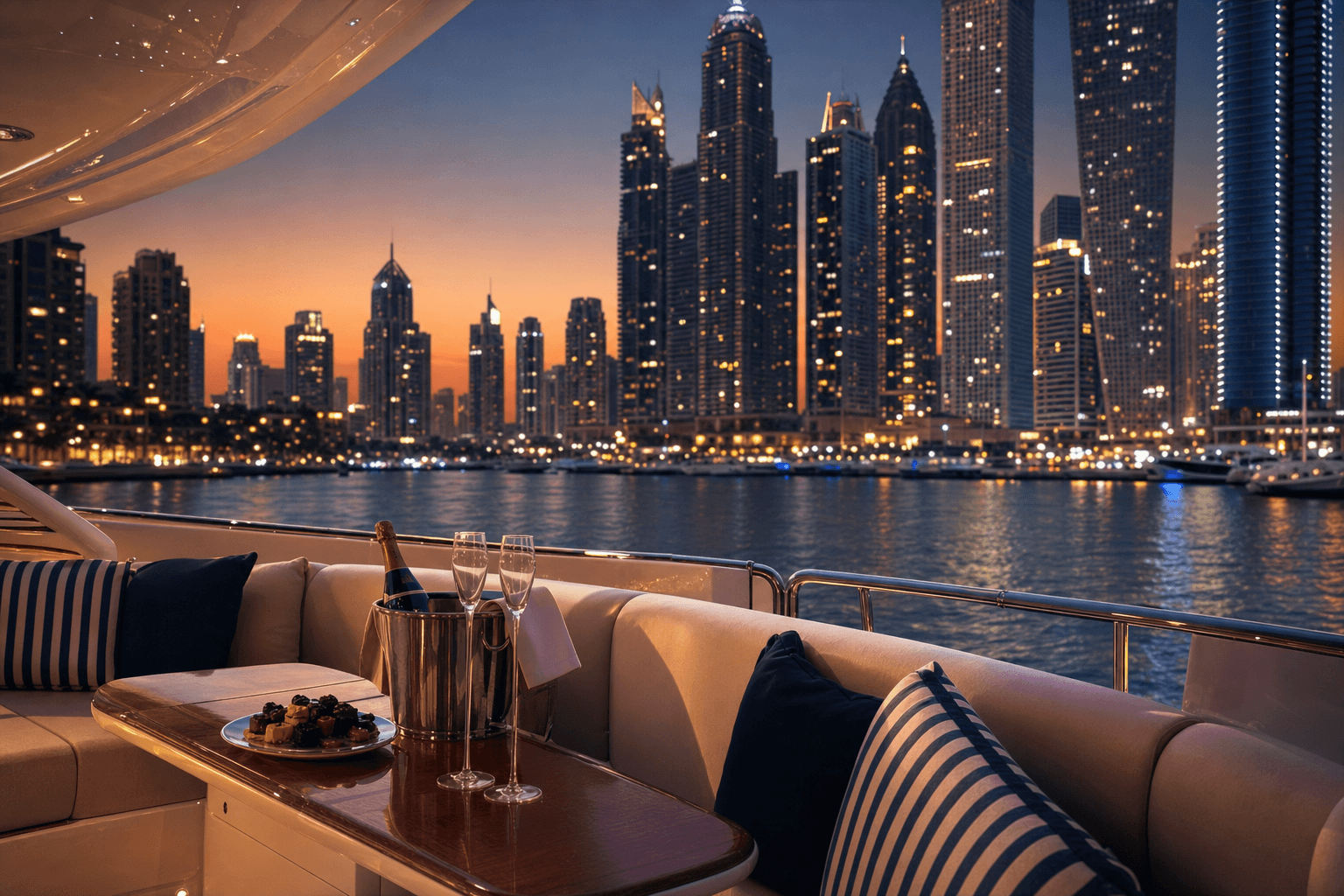
Event Planning
Abu Dhabi Event Venues Guide: Malls, Islands and Destination Locations
A practical guide to hosting events in Abu Dhabi across Yas Island, Saadiyat Island, Al Maryah Island and the capital’s major malls — with venue fit, logistics and planning advice.
Read article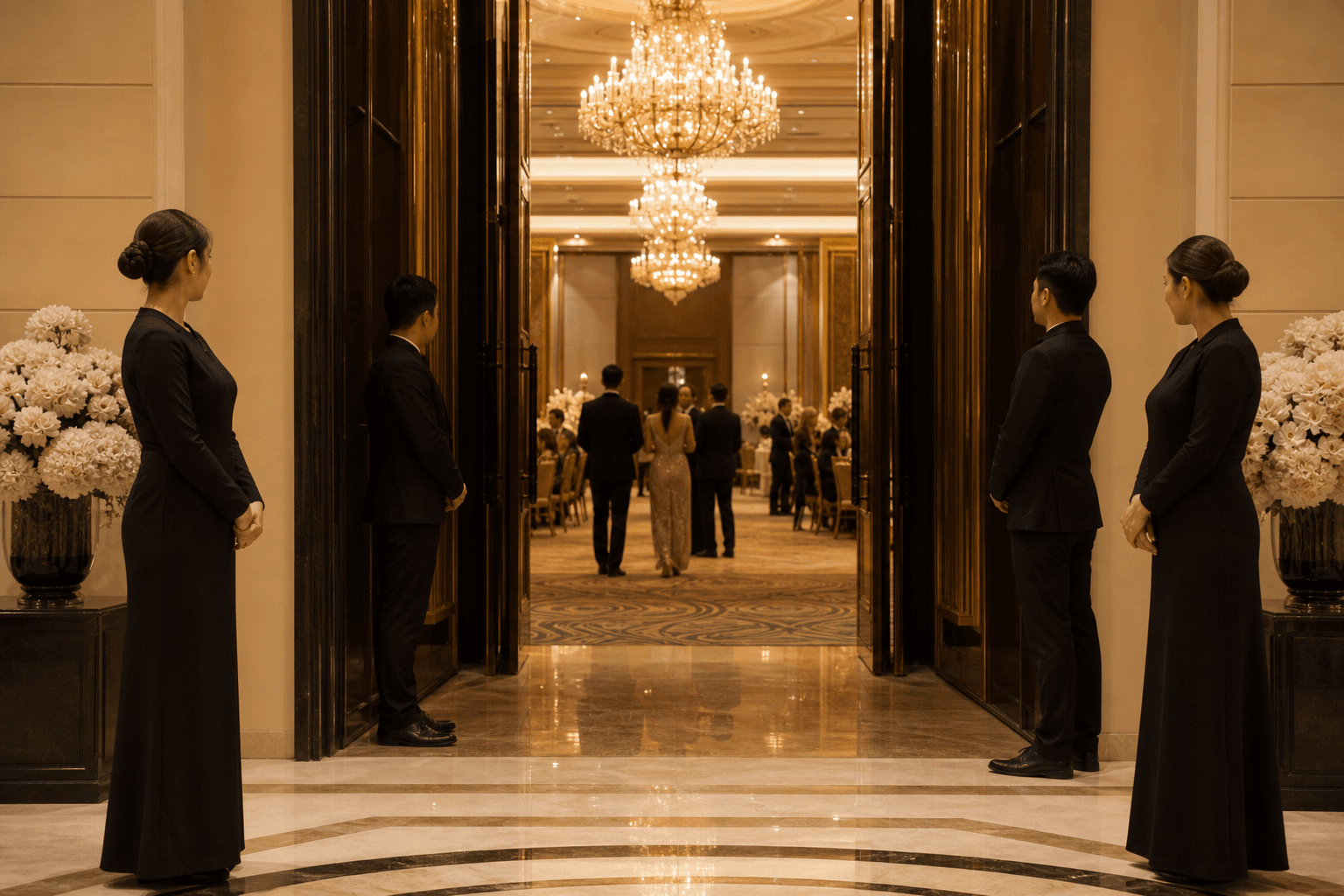
Event Planning
Complete Guide to Event Staffing, Crowd Management & Event Support Services in Abu Dhabi (2026)
A practical guide to event staffing, crowd management and on-site support in Abu Dhabi — ushers, registration, VIP guests, queues and event-day operations.
Read articleLet's Create Together
Planning an event in Dubai or the UAE?
Tell us your vision and our team will craft a tailored proposal. From intimate gatherings to large-scale productions, we bring every idea to life.