Loading…
Event Production 101: What Goes On Behind the Scenes
Event production turns an approved idea into a safe, precisely timed live experience through technical design, crew planning, rehearsals and calm show-calling.
Back to blog
Vulture Events Team13 min readProduction
When an event runs beautifully, guests notice almost nothing about how it was made — and that invisibility is the whole point. Event production is the discipline of turning an approved creative idea into a safe, precisely timed live experience. It is part engineering, part logistics and part live performance direction. Here is what actually happens behind the scenes, from the first site visit to the last flight case leaving the building.
In Dubai, production teams work inside a city that expects polish. Guests compare your ballroom to the last world-class show they attended. That expectation is met not by bigger budgets alone, but by tighter process: surveys, drawings, rehearsals and show-calling that leave little to chance.
It starts with a site survey
Before any equipment is ordered, producers survey the venue. They measure the space, check ceiling height and rigging points, locate power and its capacity, note access routes and load-in doors, and identify constraints such as weight limits, curfews or restricted areas. This survey turns a creative concept into what is physically possible in that specific room, and it prevents the expensive discovery on build day that the plan will not fit.
Photograph everything. Note column positions, door swings, carpet protection rules and where house sound and lighting already exist. A twenty-minute assumption on a floor plan can cost hours of labour later.
Technical design translates ideas into plans
Next, the concept becomes technical drawings and specifications. Producers and technical designers produce stage layouts, rigging plans, lighting and sound designs, screen and AV specs, and power distribution plans. These documents let every discipline work from the same source of truth and are also what venues and authorities need for approval.
- Stage and set design, with dimensions and structure
- Lighting plot and control
- Sound system design for the room and audience
- Video and screen specification
- Power and distribution
- Rigging and suspension plans
Vulture Events’s event production workflow treats these drawings as living documents until freeze date, then locks them so fabrication and programming can finish without chaos. Late creative changes after freeze are possible, but they cost time and money for a reason.
Sourcing, scheduling and the production book
With the design set, the producer sources equipment and crew and builds the schedule that governs everything: the load-in sequence, build order, rehearsal windows, show times and breakdown. All of this is captured in a production schedule and a run of show — the minute-by-minute document that tells everyone exactly what happens and when. The run of show is the spine of the live event.
A production book typically also holds contact lists, radio channels, emergency procedures, content inventories and room diagrams. When half the crew has never met before, the book is how strangers become a team.
Build day: load-in and assembly
On build day, the plan meets reality. Crews load in through the access routes surveyed earlier and assemble in a deliberate order — rigging and structure first, then staging, then lighting, sound and video, then finishing and dressing. Sequencing matters: get it wrong and teams end up waiting on each other or working over one another. A good production manager choreographs this so the build flows.
Dubai hotel docks can be congested when multiple events load the same day. Book dock slots, label cases clearly and stage equipment so corridors stay clear. Venue relationships matter here; crews who know the building move faster and with fewer arguments.
Testing and rehearsal
Nothing is assumed to work until it is tested. Every light is focused, every microphone checked, every screen fed content, every cue programmed. Then comes rehearsal — walking speakers and performers through the stage, running transitions, and timing the show against the run of show. Rehearsal is where problems surface while there is still time to fix them, which is exactly why experienced teams protect it fiercely.
Clients sometimes want to cut rehearsal to save money. That saving is often repaid in public mistakes. Even a short cue-to-cue for critical moments dramatically reduces risk.
Show-calling: the live director
During the event, a show-caller (or technical director) runs the show from a headset, calling cues to lighting, sound, video and stage crew in real time: "standby lights cue 12… go." This is the calm voice coordinating dozens of actions so the audience experiences one seamless flow. When a speaker overruns or something changes, the show-caller adapts on the fly. Good show-calling is invisible; poor show-calling is obvious to everyone in the room.
Headset discipline matters. Multiple people talking over the show channel creates noise that causes missed cues. Clear roles and a quiet channel are part of professionalism.
Managing the unexpected
Live events never go exactly to plan, and production is largely about absorbing that. Backup microphones, spare projectors, redundant power, contingency timings and a crew briefed on what to do when something fails — this preparation is why a professional event survives a hiccup that would derail an amateur one. The audience usually never knows anything happened.
Weather contingencies for outdoor UAE events, generator plans, and medical liaison with venue teams all sit in this category. Hope is not a backup strategy.
Health, safety and compliance
Underpinning all of it is safety: structural calculations for anything built or suspended, electrical safety, risk assessments and method statements, fire and evacuation planning, and the documentation venues and authorities require. In the UAE this is taken seriously, and a credible production team treats compliance as fundamental rather than paperwork to be rushed.
Fire lanes, exit widths and cable ramping are not optional aesthetics. They are how you keep a beautiful room legal and safe. Stage design that blocks exits will be redesigned, preferably before build day.
Breakdown: the invisible finale
When the last guest leaves, the crew that built the event over days dismantles it in hours — safely, in the right order, respecting venue rules and timings. Equipment is checked, packed and returned; the venue is handed back clean. A rushed or careless breakdown can cause damage and cost, so it is planned as carefully as the build.
Overnight breakdowns are common in Dubai hotels with next-day events. Fatigue management, clear prioritisation and enough crew prevent injuries and broken kit during the least glamorous hours of the job.
People, radios and the soft skills of production
Equipment is only half the craft. Production managers spend much of their energy aligning humans: client stakeholders, hotel engineers, caterers, security and performers. Soft skills — clear briefings, calm escalation, honest timelines — prevent technical plans from collapsing under social friction.
Radio etiquette, call times and meal breaks sound trivial until a twelve-hour build day runs without them. Look after the crew and the show looks after itself.
How clients can help production succeed
Approve content on time. Freeze the run of show before rehearsal. Bring decision-makers to the tech rehearsal. Share VIP movement plans early. Avoid surprise speeches. These behaviours cost nothing and dramatically improve outcomes. The best client-producer relationships feel collaborative rather than adversarial when something needs to change live.
Timelines, approvals and venue coordination
Production starts to gain certainty when the creative ambition is translated into dates. The producer works backwards from doors open: when the venue needs drawings, when scenic pieces must go to fabrication, when artwork must be released, when equipment must be reserved, and when a complete rehearsal can happen. A realistic schedule includes review time, not only making time. In Dubai, that also means accounting for hotel engineering sign-off, loading-dock bookings, supplier access lists and, where relevant, landlord or authority requirements. Leaving these items until the final week creates avoidable pressure on every department.
The venue is a technical partner, not simply a room rental. Its events and engineering teams can confirm power availability, rigging limitations, fire routes, service timings, permitted fixing methods and noise restrictions. Ask early about anything unusual: vehicle access for a launch reveal, a haze effect, heavy scenic pieces, pyrotechnic alternatives, exterior branding or drones. The answer may change the design, but discovering it at concept stage is manageable. Discovering it after a scenic workshop has built a feature is expensive.
Keep one current set of documents. The room plan, stage drawing, equipment list, power plan and run of show must agree with one another. When a client moves a dinner table, adds an award category or requests a larger screen, assess the knock-on effects across access, sightlines, cabling, content and crew calls. A disciplined change log makes those decisions visible and protects the client from a quote that appears fixed while the scope quietly grows.
Rehearsal is where the experience becomes real
A technical rehearsal is not just a chance to test equipment. It is the first time speakers, performers, content and crew meet the actual space. Walk presenters to their marks, set lectern and confidence-monitor heights, test handheld and headset microphones, and confirm exactly how people enter and leave the stage. For a bilingual programme, rehearse interpretation handovers and make sure translated names, slides and lower-thirds are correct. For awards, verify the winner order, walk-on music, trophy handoff and camera position rather than relying on a spreadsheet.
Use a cue-to-cue approach when time is tight. Instead of performing every speech in full, run only the transitions and technical moments: opening video, walk-on, panel change, award sting, product reveal and finale. The show-caller records timing, identifies holds and confirms who gives each “go.” A full dress rehearsal is even better for complex shows, but a focused cue-to-cue is vastly safer than no rehearsal at all.
Content management needs the same discipline. Collect presentations to a named deadline, convert where appropriate, test fonts and embedded video, then lock a master playlist. Last-minute speaker edits happen; the practical solution is a controlled update process, not pretending they will not. The video operator should know which version is live, the show caller should know whether a change affects a cue, and the client should nominate one person to approve exceptions.
Budget for outcomes, not isolated equipment
Production estimates can look detailed because the work is interconnected. Reducing a line item may appear simple until it removes the crew member who safely manages a changeover, the processor that provides a backup signal path or the rehearsal time that catches a wrong file. Ask what job each item performs and what risk is accepted if it is removed. That gives a better conversation than comparing a list of equipment without its operating context.
There are sensible ways to control cost. Reuse a strong scenic language across several rooms, focus lighting on the guest-facing areas, choose an LED size that matches the seating plan, and consolidate delivery windows where the venue allows. Protect the elements that affect safety, intelligibility, sightlines and cueing. Guests rarely remember an expensive cable route, but they immediately notice a microphone failure, a delayed reveal or a blocked view.
Frequently asked questions
What is the difference between event planning and event production? Planning owns the overall experience, guest journey, suppliers and objectives. Production owns the technical and logistical realisation of the live show — stage, AV, crew, cues and safety of the build. Many agencies combine both; clarity about who owns which decisions still matters.
How long does a typical ballroom build take in Dubai? It varies from a few hours for a simple stage-and-screen package to multiple days for complex sets, hanging truss and large LED. The site survey and drawings determine the honest answer more than a generic estimate.
Do we always need a show-caller? For anything with timed cues, multiple technical departments or a reveal, yes. For a simple dinner with background playlist and no stage moments, a lighter technical lead may suffice. When in doubt, budget for show-calling on high-visibility moments.
Why do production quotes include contingency labour? Because live builds encounter dock delays, late content and venue surprises. A quote with zero flexibility looks neat and fails under pressure. Reasonable contingency is a sign of experience.
Event production is a huge amount of coordinated, mostly unseen work that exists so guests can simply enjoy themselves. If you want a team that handles the surveys, the technical design, the crew, the rehearsals and the calm show-calling as one accountable operation, Vulture Events produces live events across Dubai and the UAE — tell us your vision and we will handle the how.
event productionstagingAVshow callingbehind the scenes
Related services
Keep reading
Production
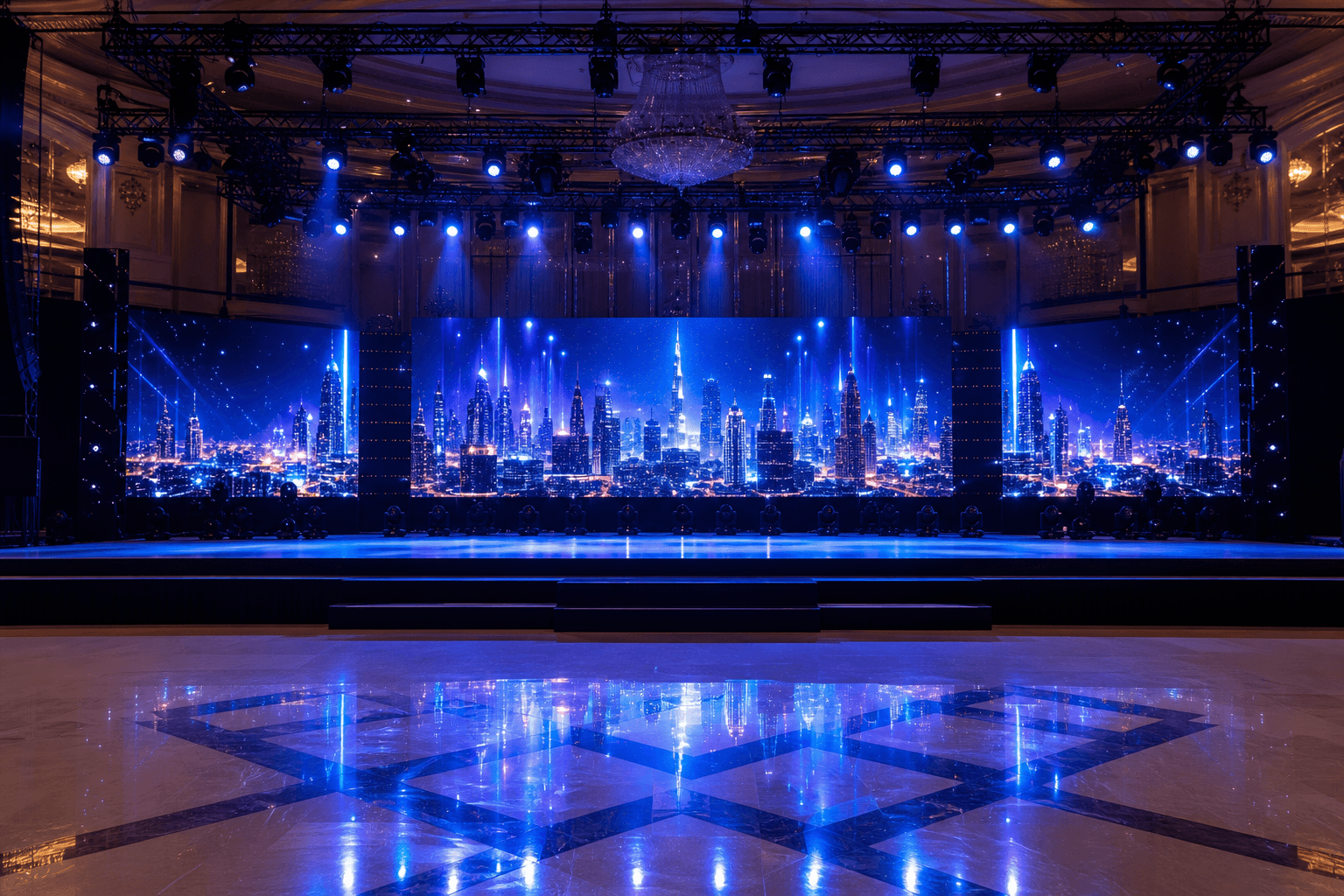
LED Screens vs Projection: Choosing the Right Visuals
LED screens and projection solve different problems. Choose based on ambient light, viewing distance, content, surface, camera needs and venue constraints.
Read article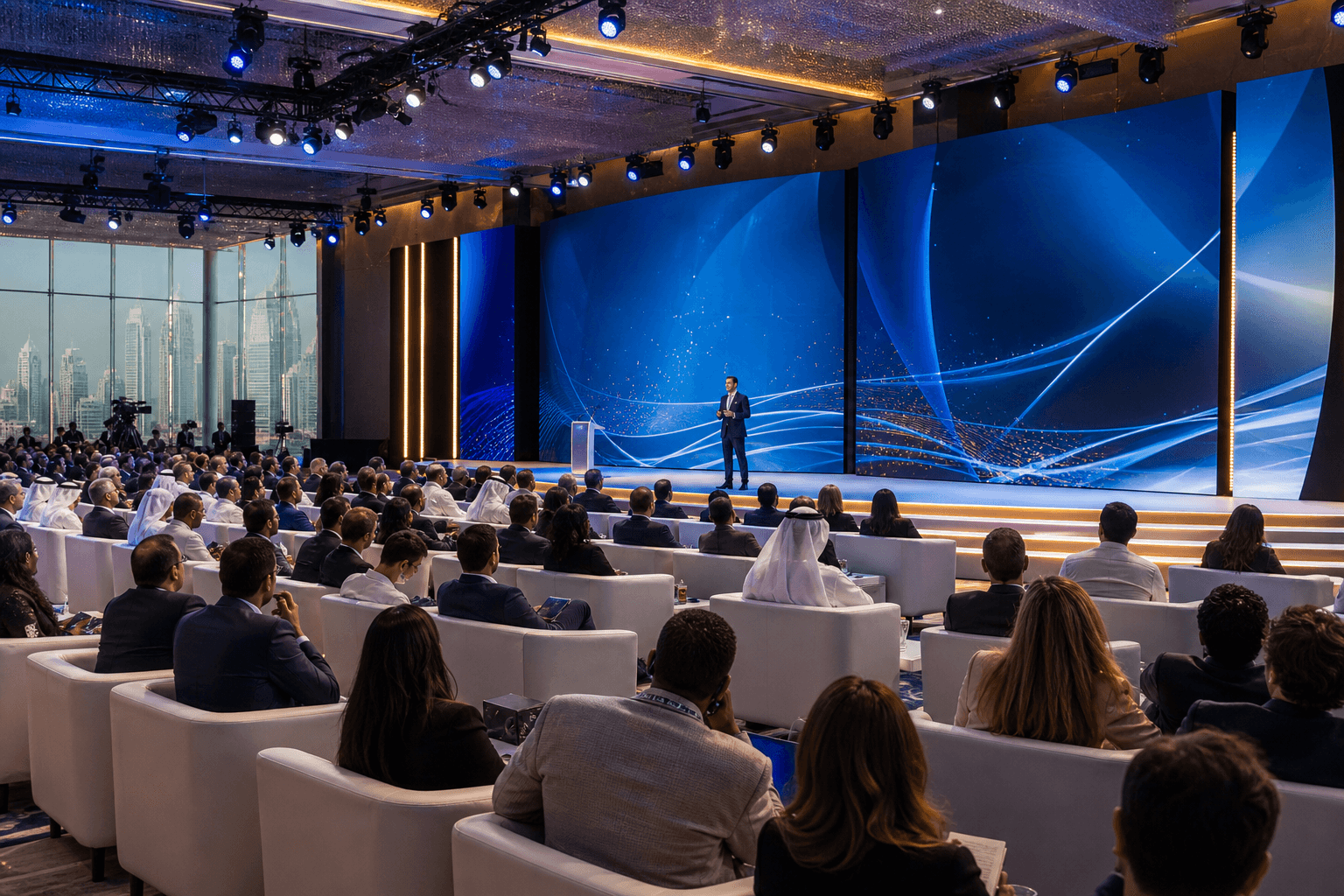
Event Planning
Conference Management Checklist: Planning a Flawless Event
A conference checklist that reveals owners, dependencies and deadlines, protecting the delegate experience from registration through to post-event reporting.
Read article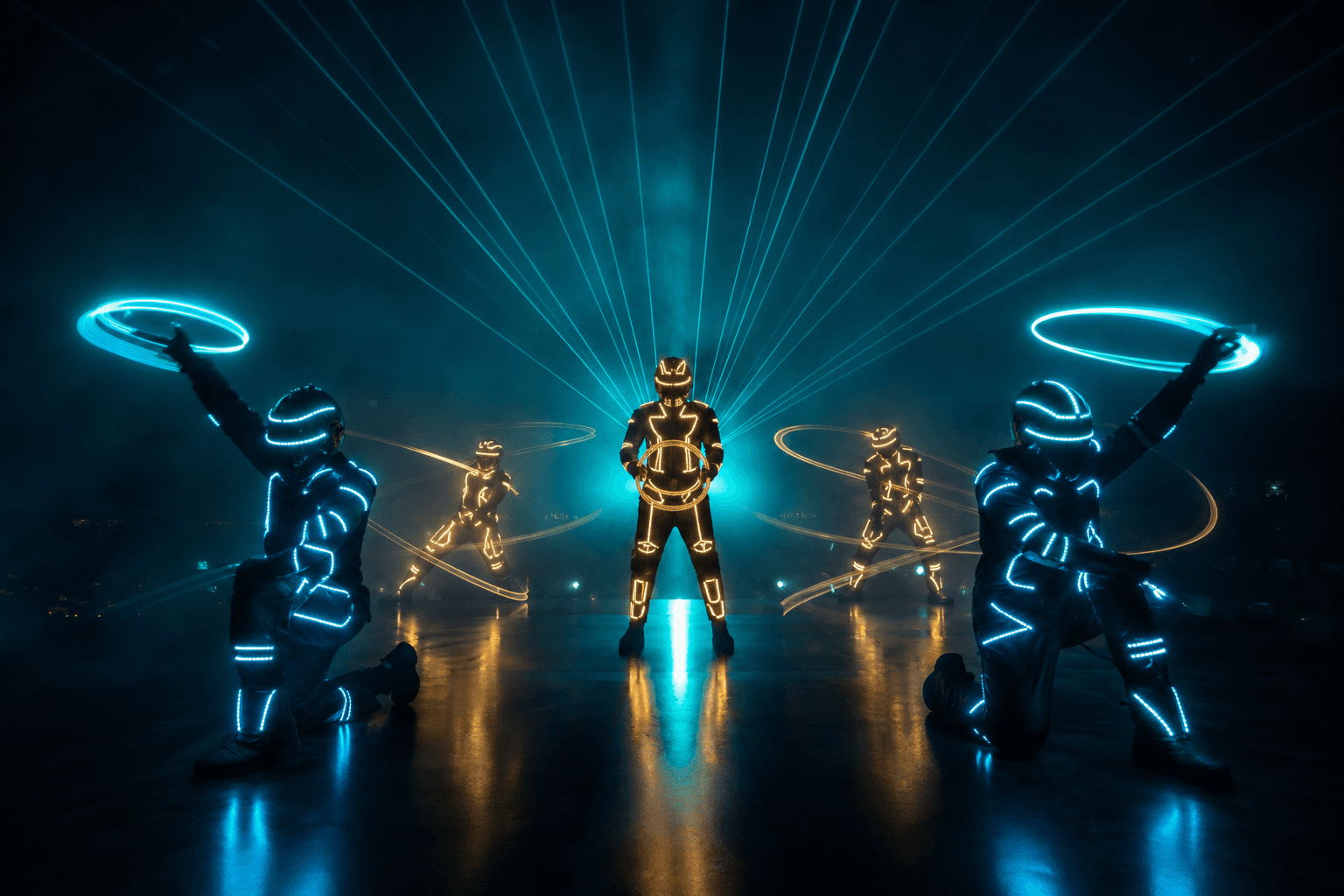
Event Planning
Global Village Dubai: What to Know Before Season 31
A practical guide to Global Village Dubai for Season 31 — what visitors can expect, how brand and event teams should plan, and how entertainment, staffing and production fit a busy outdoor destination.
Read articleLet's Create Together
Planning an event in Dubai or the UAE?
Tell us your vision and our team will craft a tailored proposal. From intimate gatherings to large-scale productions, we bring every idea to life.