Loading…
How to Choose an Exhibition Stand Builder in Dubai
Choose an exhibition stand builder in Dubai as an operational partner, verifying design, fabrication, venue knowledge, documentation and on-site accountability.
Back to blog
Vulture Events Team12 min readExhibitions
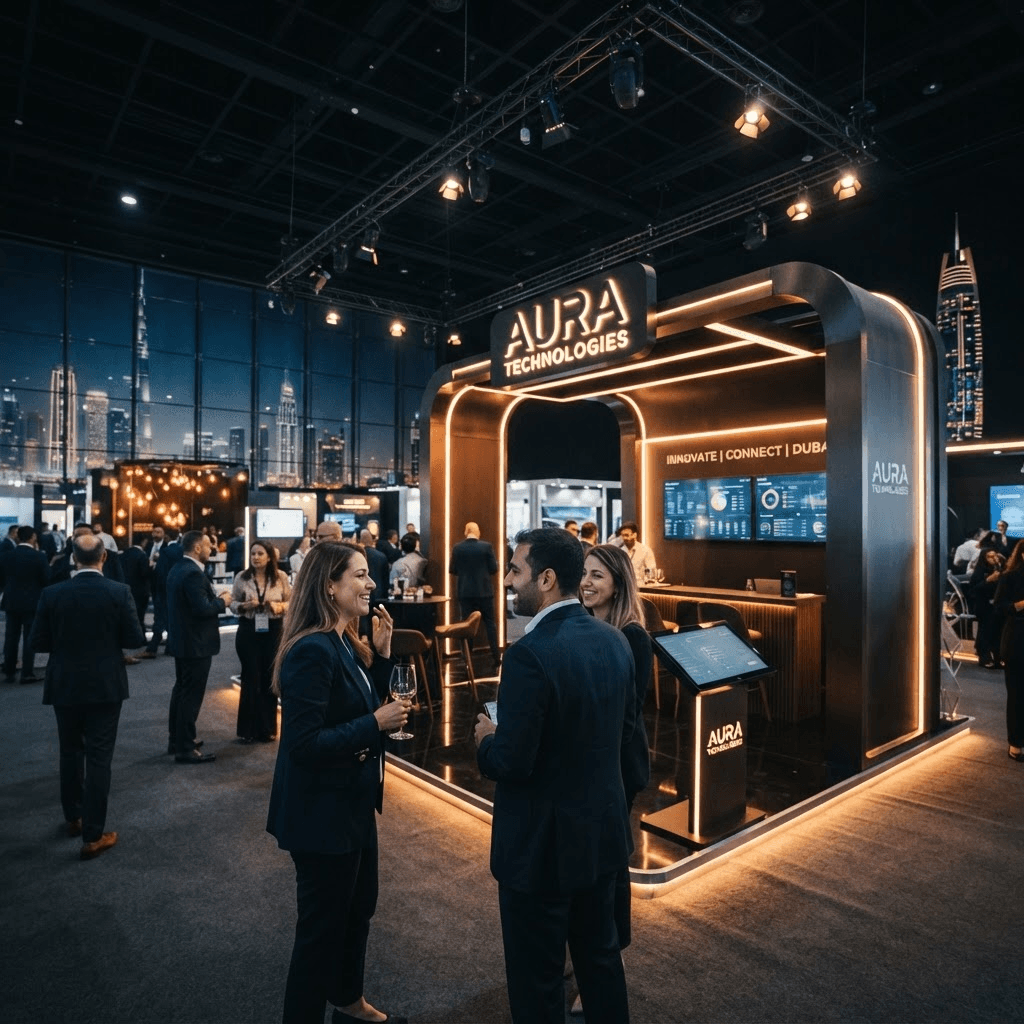
Your exhibition stand builder is not a vendor you pay and forget; they are the partner whose competence determines whether your show goes smoothly or turns into a crisis at 2am the night before doors open. Dubai has an enormous range of contractors, from world-class to worryingly casual, so choosing well is mostly about due diligence. Here is how to separate a safe pair of hands from an expensive gamble.
The UAE market attracts international brands that expect European or North American build standards, delivered inside compressed Gulf build-up windows. That combination rewards builders who are organised, documented and calm under pressure — and it exposes anyone relying on last-minute improvisation.
Look for design and build under one roof
The cleanest arrangement is a partner who designs and fabricates, because it removes the finger-pointing that happens when a designer and a separate builder disagree. When one team owns the concept, the drawings and the physical build, accountability is clear and problems get solved rather than passed along.
If a company outsources fabrication, ask who actually builds the stand, where, and who is responsible on site. The answer tells you a lot about how a problem would be handled under pressure.
Vulture Events’s exhibition stand builder model keeps design, fabrication planning and site management in one accountable chain for exactly this reason. When a graphic dimension is wrong or a counter arrives damaged, you want one team that can remake and reinstall without a debate about whose contract covers the fix.
Judge the portfolio critically
Every builder shows glossy renders; you want evidence of delivered stands. Ask for photographs of completed builds — ideally at the venue you are exhibiting in — and, where possible, references from past clients. Look for work of similar scale and complexity to yours, and be alert to a gap between polished visuals and rougher reality in the finished photos.
- Real photos of built stands, not just 3D renders
- Projects of comparable size and ambition to yours
- Experience at your specific venue, such as DWTC or ADNEC
- Client references you can actually contact
Visit a live show if timing allows and walk stands they have built. Finishes, alignment, cable management and how the stand looks after three days of traffic reveal more than any pitch deck.
Verify venue knowledge and documentation
Major Dubai venues have strict rules and require detailed contractor documentation: technical drawings, structural calculations for anything tall or suspended, risk assessments and method statements, and formal approvals to a deadline. A builder who knows the venue will handle this fluently. One who does not can have your stand held up in approvals or, worse, refused on site.
Ask directly how they manage venue approvals and health-and-safety documentation. Confident, specific answers are a good sign; vagueness is a warning.
Builders familiar with DWTC’s processes, hall rules and official contractor portals save you days of friction. The same is true for ADNEC and other regional venues. Venue literacy is a skill, not a brochure claim.
Insist on clear, itemised quotes
A trustworthy quote is transparent. It shows design, fabrication, graphics, AV, logistics, installation and the venue services you are responsible for, so you can see what you are paying for and compare like with like. Beware unusually low quotes that omit power, rigging, storage or dismantling — those costs will reappear later, often at a premium.
Clarify explicitly what is included and what is not, and confirm who orders and pays for venue services, because assumptions here cause the most disputes.
Ask about variation rates for late changes. Shows evolve; graphics get updated; product dimensions change. Knowing how variations are priced and approved prevents bitter surprises during the final fortnight.
Understand who is on site — and accountable
Ask who supervises the build and who your point of contact is during build-up, show days and breakdown. Live shows always throw up last-minute issues, and what matters is having an empowered, on-site project manager who can make decisions and fix problems quickly. A builder with a strong on-site presence is worth paying for.
Meet that project manager before you sign if the show is high stakes. Chemistry and communication style matter when you are solving problems at midnight. A brilliant workshop team with a weak site lead still leaves you exposed.
Check capacity and timelines
A builder juggling too many stands in the same build-up window may not give yours the attention it needs. Ask how many projects they are running for your show, confirm their production timeline, and make sure it leaves margin for changes and quality checks rather than finishing in a last-minute rush.
Peak weeks around major Dubai shows stretch the entire contractor market. Book early for those windows. If your builder sounds casual about overlapping commitments, dig deeper.
Confirm quality, safety and after-service
Quality shows in the details — finishes, joinery, electrical safety, stability. Ask about their quality-control process and how they handle snags during the show. A good partner stays reachable throughout the event, not just until the stand is handed over.
Electrical safety and structural stability are non-negotiable. Confirm that works follow venue rules and that temporary electrics are installed by competent people. A beautiful stand that trips breakers or feels unstable is a liability, not an asset.
Trust the relationship, not just the price
Finally, weigh how they communicate. Do they ask good questions about your objectives, respond promptly and explain trade-offs honestly? You will be relying on this team under pressure, so responsiveness and straight talk during the sales process are a fair preview of how the project will run.
Be wary of partners who agree to every request without flagging risk. Honest pushback — about timeline, height rules, or an impractical detail — is a sign of professionalism, not inflexibility.
Red flags that deserve a hard pause
Quotes that are dramatically cheaper than the market without a clear scope reduction. Reluctance to share real build photos. No named site manager. Inability to explain venue approval steps. Pressure to pay unusual percentages upfront without milestones. Missing insurance or unclear liability language. Any one of these can be discussed; several together are a reason to walk away.
Also watch for overpromising on double decks, hanging structures or complex AV without showing comparable delivered work. Renders are cheap; engineering is not.
How to brief a builder well
A strong brief shortens selection and improves quotes. Share show name and hall, stand number and open sides if known, objectives and audience, must-have zones (demo, storage, meeting, hospitality), brand guidelines, budget band, and decision timeline. Include product dimensions and any heavy items that affect flooring or structure.
Invite two or three serious contenders rather than ten. Deep conversations with a shortlist beat shallow comparisons across a crowded field.
Run a disciplined selection process
Treat the appointment as a short procurement exercise, even when a recommendation brought the builder to you. Issue the same brief to every shortlisted team, give them the same deadline and ask for the same deliverables: a concept response, itemised cost, delivery programme, named project lead, assumptions and exclusions. This protects you from comparing a fully engineered proposal with a pretty concept that leaves half the work to be priced later.
Set aside time for a review call rather than scoring PDFs alone. Ask the team to talk through visitor flow, likely venue risks and the point at which they will freeze artwork and fabrication. The useful question is not “can you do it?” but “what could cause this plan to change, and how would you handle it?” Experienced Dubai contractors will identify access restrictions, service deadlines, production dependencies and practical alternatives without being prompted repeatedly.
Use a simple weighted scorecard. Delivery record and venue experience should carry more weight than a marginally lower price for a high-profile show. Design relevance, documentation, quality controls, commercial clarity and responsiveness are all legitimate categories. Invite the event owner, marketing lead and a sales representative to score independently, then discuss large differences. Sales may spot that a beautiful plan has too few places to have a useful conversation; operations may notice it cannot be installed in the available window.
If your organisation requires onboarding checks, complete trade licence, VAT, insurance and bank-detail verification before the creative timetable becomes critical. Also confirm whether the stand builder can name the subcontractors responsible for AV, rigging and specialist printing. Subcontracting is common and often sensible; opaque responsibility is not. Your contract should state who coordinates those parties and who remains accountable if an item fails.
Review the proposal before signing
Read the scope with the drawing open beside it. Every visible item should be described: flooring finish, furniture quantities, screen sizes, lighting type, storage locks, counter equipment, graphics and installation. Check whether visuals show features that the quotation labels as optional. This is one of the fastest ways to catch accidental optimism before it turns into a variation.
Agree a change-control process in writing. Minor copy edits may be included until an artwork deadline, while a new meeting room or different product display should trigger a signed variation with price and programme impact. Clear rules do not make a builder inflexible; they keep both sides from guessing under deadline pressure. For larger builds, request a workshop or pre-build review of key finishes and joinery before dispatch to the venue.
Frequently asked questions
Should we choose the cheapest builder? Almost never if the show matters commercially. Choose the best-value builder who can prove delivery at your venue and complexity. Price matters, but a failed build costs more than the gap between quotes.
Is an international agency better than a local fabricator? Not inherently. What matters is who controls the site in Dubai during build-up. An international creative team paired with a weak local build partner is a common failure pattern. Prefer clear local accountability, whether the brand relationship sits locally or globally.
How early should we appoint a builder? For custom work at major Dubai shows, twelve weeks or more is comfortable; eight is workable for simpler projects; less than that raises risk. Modular programmes can move faster if the kit already exists.
What does a good handover look like? A walked snag list, tested electrics and AV, cleaned surfaces, briefed host team on storage and demo power, and a clear show-day contact. You should feel ready for doors, not still negotiating unfinished corners.
Choosing a stand builder is really choosing who you trust with your presence at a show that may have taken months to prepare for. Once you have shortlisted partners, walk the process with our DWTC exhibitor checklist and skim the exhibition stand FAQ so drawings, services and staffing are not left to build week. If you want a design-and-build partner with deep UAE venue experience and genuine on-site accountability, Vulture Events builds exhibition stands across Dubai and the Emirates — send us your brief and we will show you exactly how we would deliver it.
exhibition stand builderstand contractor Dubaitrade showexhibiting tipsDWTC
Related services
Keep reading
Exhibitions
How Much Does an Exhibition Stand Cost in Dubai?
Exhibition stand cost in Dubai depends on far more than floor area. Here is a realistic breakdown of design, build, graphics, AV, venue services and hidden extras.
Read articleExhibitions
Custom vs Modular Exhibition Stands: Which Is Right for You?
The custom-versus-modular decision is strategic. Compare brand impact, reuse, transport, flexibility and total programme cost rather than first build price alone.
Read articleExhibitions
DWTC Exhibitor Checklist Dubai: From Stand Booking to Tear-Down
A practical DWTC exhibitor checklist for Dubai trade shows — drawings, venue services, build-up, staffing, lead capture and tear-down — so nothing critical is left to build week.
Read articleLet's Create Together
Planning an event in Dubai or the UAE?
Tell us your vision and our team will craft a tailored proposal. From intimate gatherings to large-scale productions, we bring every idea to life.